
General class. HF, VHF, and making contacts all over the world. This is why you should get licensed too.
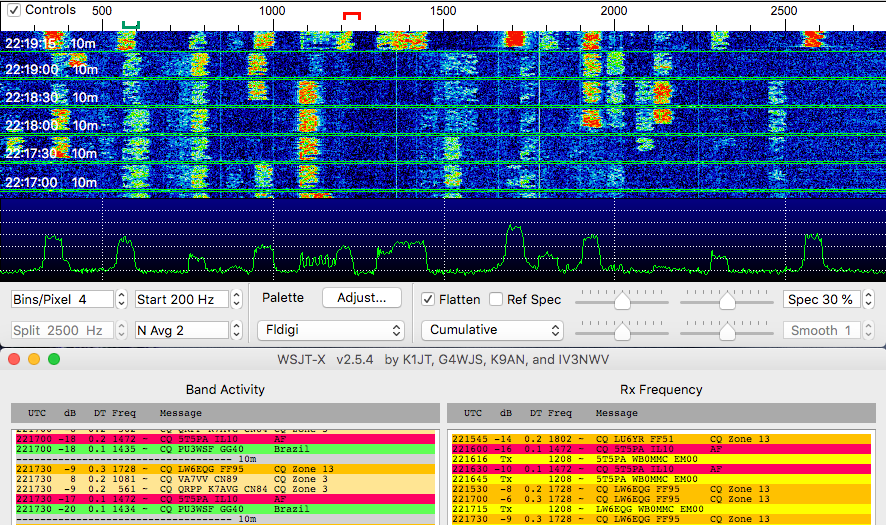
No towers, no cell carrier, no internet. A wire, a radio, and the ionosphere will get your voice to another continent.
When the power's out and the cell network is jammed with everyone else's traffic, hams are still talking. Served agencies count on that.
Antenna theory, RF electronics, propagation, digital modes, contesting, DXing, building your own gear — pick the layer that hooks you and go deep.
A Technician license and a $30 handheld gets you on the air the same week. The tower and amplifier can wait.
Local repeater nets, HF ragchews, and strangers who'll spend twenty minutes helping you troubleshoot a feedline over the air.
Some nights the bands are dead. Then one evening they open up to Europe and every hour of tinkering pays off at once.
One study session with a practice-question app, one 35-question exam, no Morse code required. This gets you on VHF/UHF repeaters and some HF privileges immediately.
On air the same week you passOpens up the HF bands — 80 through 10 meters — where the real DX and ragchewing happens. This is the license that turns a handheld into a worldwide station.
Where FT8, SSB DX, and CW all liveThe full toolbox — every band, every sub-band, every mode. Not required to enjoy the hobby, but worth it once you know you're staying.
For when you're building your own amp and arguing about antenna theoryListen for KR1ATC checking in on AK4H, the JARS repeater — I'm a member of the club that keeps it on the air. Or find me lower down the dial calling CQ on 20m SSB and FT8 most evenings.
New to the hobby, or thinking about it? Get on the air, key up, and ask a question — that's still how most of us learned.